Understanding Why Current Revenue Growth Has Not Kept Pace with Fire Department Costs
Many residents have asked why natural revenue growth under ESD 16's current $0.05 tax cap isn't enough to meet today's fire department needs. It's an understandable question—especially given the growth seen in property values and sales tax over the past several years. The answer lies in how dramatically the fire service has changed during that same time.
While Klein Fire Department has seen revenue growth since 2021, that growth occurred alongside a fundamental shift in how fire protection is provided in the district. Understanding why revenue has fallen short requires looking at staffing, service expectations, inflation, and the unique funding structure of an Emergency Services District.
2021—2024 was a major transition period for Klein Fire
Staffing all 8 stations 24/7 was the largest cost driver
During the transition period:
- Not all stations were staffed 24/7
- Staffing increased gradually as the ESD assumed operations
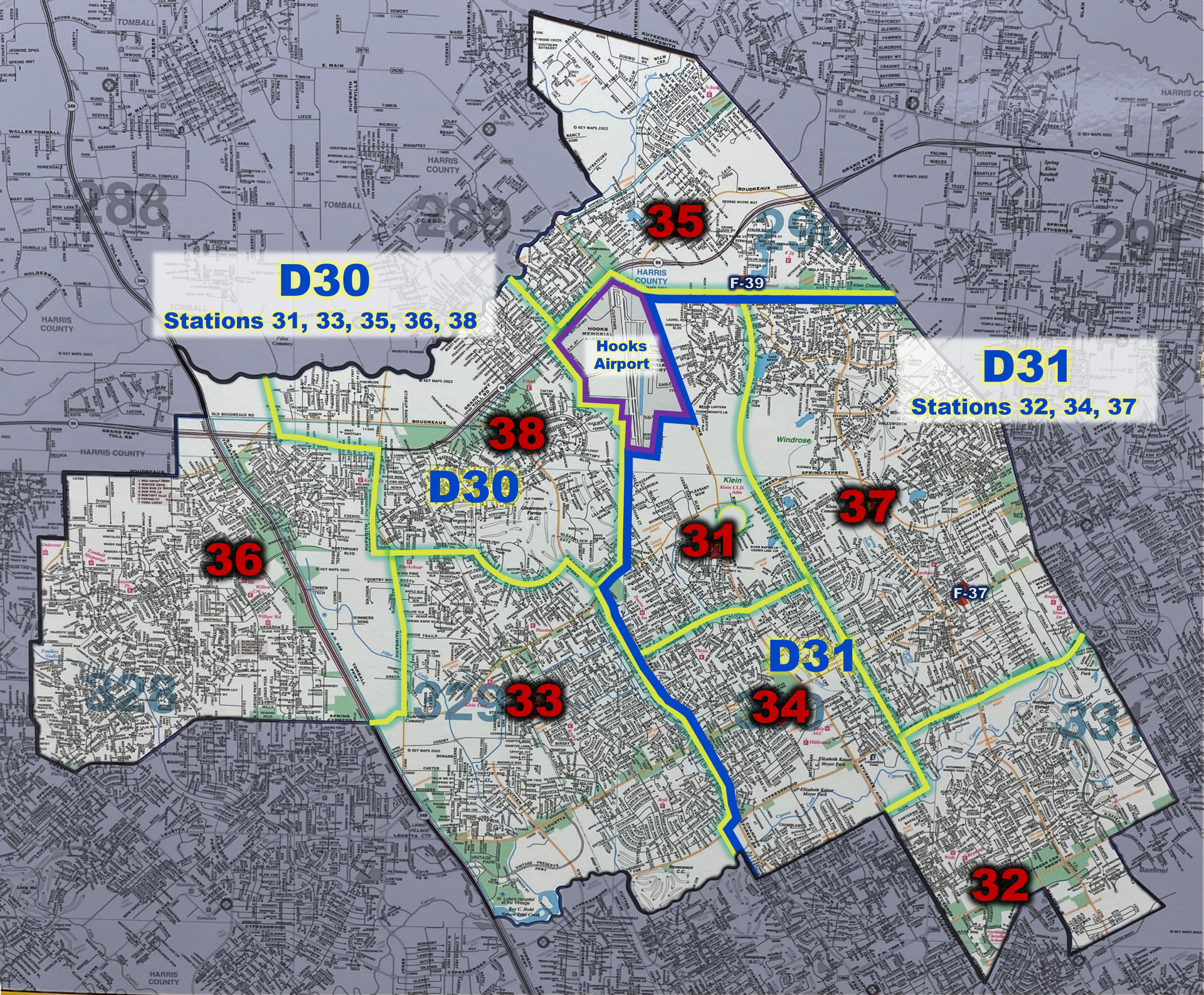
- By January 2023, all 8 stations were fully staffed 24/7/365
- In 2023, the district began hiring full‑time firefighters directly
Moving from a mostly volunteer model to a combination department with full‑time, part‑time, and remaining volunteer members dramatically increased labor costs — salaries, benefits, overtime, training, certifications, and physicals.
This is the single largest reason natural revenue growth has not kept pace.
The current revenue at the $0.05 cap does not cover the cost of operating 8 fully staffed stations
Once all stations were staffed 24/7, the district’s ongoing operational costs increased permanently.
Today’s revenue — even with growth —
does not cover:
- Full staffing for all 8 stations
- Competitive pay needed to recruit and retain firefighters
- Training and succession planning
- Supplies, fuel, and equipment wear from rising call volume
- Compliance with TCFP, PPE, SCBA, and NFPA standards
The $0.05 cap was set decades ago for a very different fire service model.
ESDs do not have the diversified revenue sources cities have
Unlike municipalities, an ESD does
not receive:
- Utility revenue
- Permit fees
- Fines
- Hotel taxes
An ESD must fund
everything — staffing, apparatus, facilities, maintenance, logistics, HR, IT, training, and administration — from
property tax + sales tax only.
That structure makes the cap especially limiting.
Sales tax growth is helpful, but it is volatile and cannot fund core staffing
Sales tax is now the largest portion of revenue, but it fluctuates with the economy. It cannot be relied upon for long‑term commitments like:
- Salaries
- Benefits
- Station staffing
- Fleet replacement cycles
- Training
Stable services require stable revenue.
Inflation in the fire service has been unprecedented since COVID‑19
Costs for essential equipment have risen dramatically:
- Fire engines have nearly doubled in price
- Bunker gear and protective equipment are up 50%+
- Construction costs for stations have surged
- Radios, SCBAs, and rescue equipment have seen double‑digit increases
Natural revenue growth has not kept pace with these industry‑wide cost increases.
Klein's growth continues to increase demand
To sum it up, revenue has grown, but
not at the rate required to operate a modern, fully staffed fire department across 8 stations, replace aging equipment, and prepare for Klein’s continued growth.
The transition to a fully staffed department, rising call volume, inflation, and the limited revenue structure of an ESD have all outpaced the natural growth that occurred under the $0.05 cap.